Methodology
Overview
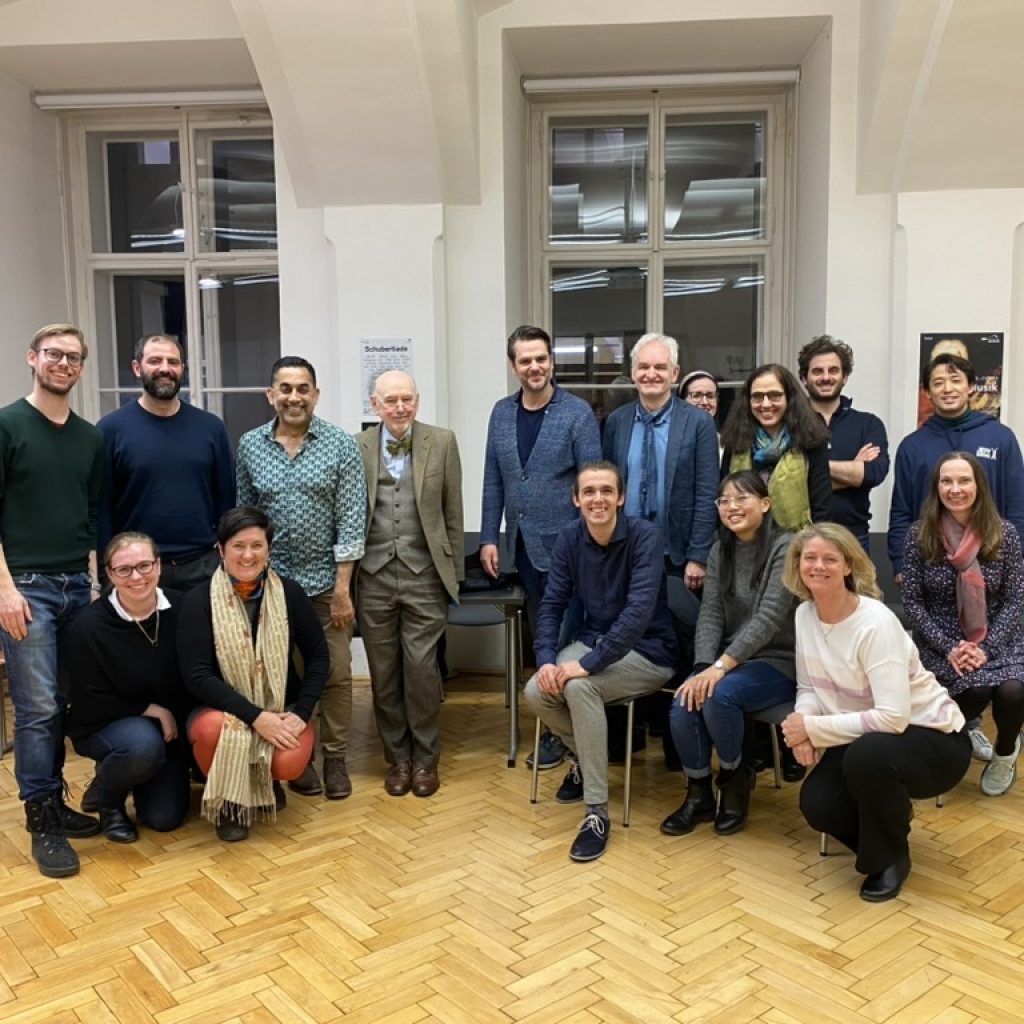
The main goal of this research-based creative project is to recover knowledge of bel canto practices and, through practical experiments, develop a model that informs future advancements in vocal performance. This project investigates the varied sound effects and colours that singers often employed, and how these effects were practically achieved in songs, recitatives (a style of singing ordinary speech), arias (compositions for a single singer), cantatas (compositions in several movements with accompaniment), operas (theatrical works set to music with singing parts), and oratorios (large concert works with solo singers, choir, and orchestra). The acquisition and dissemination of this knowledge has been directed by world-leading experts in archival research, historically informed performance, practice-led methods, and performance science, working with a community of vocal practitioners (professional and higher-tertiary level singers). guided by the project aims:
Project Aims
- To explore historical styles for bel canto repertory through implementation of a new multi-modal methodology combining recording emulation, and practical and collaborative active experimentation.
- To generate a taxonomy of bel canto sounds and practices documented in research-based exemplar recordings, made in a range of settings, to inform and expand classical singing practice, teaching and scholarship.
- To foster and influence change in classical singing, disseminating the project’s approach and findings (through symposia, written outputs, and video and audio recordings) to networks of educators, practitioners and industry in Australia and internationally.
This project seeks to re-invigorate bel canto, by illuminating new ways of performing, understanding, and hearing its music. By the project’s end, we will have acquired new knowledge of this significant era in music history, and will have tested and disseminated that knowledge through experimental research-based interpretations captured in recordings, and written outputs.
Research Components
Preliminary Research
During the bel canto era, singers adapted their sound to the sense of the words to support an impassioned discourse, thus positioning themselves as primary creators of meaning in the musical work (Toft, 2011; McMahon, 2013, 147– 148). Early sound recordings capture the last representatives of the bel canto tradition, providing tantalising glimpses of these singers’ performance practices.
The singers include: sopranos Adelina Patti (1843–1919), Lilli Lehmann (1858–1929), Emma Albani (1847–1930), and the Australian-born Nellie Melba (1861–1931); the contraltos Marianne Brandt (1842–1921) and Ernestine Schumann-Heink (1861–1936); tenor Gustav Walter (1834– 1910); and the baritones Peter Schram (1819–1895), Jean-Baptiste Faure (1830–1914), Sir Charles Santley (1834– 1922), Victor Maurel (1848–1923), Lucien Fugère (1848–1935), Sir George Henschel (1850–1934), and Mattia Battistini (1856–1928).
-
Recording Emulations
Recording Emulations In the 2023 Emulation Module, Vocalists employed a novel, practice-led method to emulate (imitate) historical recordings. The process uses performance body skills to reimagine musical practices from the past. Early sound recordings documented…
Their recordings retain elements of customs that reflect documentary evidence of late-18th- and early-19th-century practice (Brown, 1999, 415–438; Toft, 2013, 234–35). These singers employed a mixture of high, neutral (Toft, 2011; Potter, 2014, 20), and occasionally low larynx positions (evidenced on recordings) to produce a spectrum of lighter sounds than is usually associated with the ‘modern’ mode of constant lowered larynx use (Toft, 2000, 25–26). In a variety of genres spanning Mozart to Verdi, their expressive techniques emphasised the text, and included:
- A generally narrower and less continuous vibrato (pulsating pitch change) than is currently employed (with some exceptions, for example in revenge arias).
- Frequent and subtly varied portamenti (audible sliding between two adjacent pitches).
- Marked alteration of note placements, rhythms and tempi.
- Matching of register and tone quality to the emotions evoked by the text and,
- Highly-articulated phrasing and pauses to define rhetorical figures (Toft, 2013).
This is almost entirely different from current classical singing expectations (S. Potter, 2014, 2), though these techniques are still employed in jazz and other popular music forms. By contrast, the characteristics of ‘modern’ vocal (and instrumental) performance style which developed during the 20th century have been defined as meticulous score realisation, and technical perfection (for example timbral evenness across the entire range of the voice), with notation delivered ‘artistically’ but within the boundaries of strict rhythm and tempo (Brown in Peres Da Costa, 2012; Peres Da Costa, 2021a). In singing, growing concern at this time for projection in increasingly large spaces, above the tonal heft of a large modern orchestra or grand piano, led to the establishment of ‘modern’ vocal practices, which involved the sacrifice of some aspects of expressive interpretation including:
- Modification of vowel sounds by darkening of tone through increase of space in the mouth and throat—
low tongue and high soft palate—(Daffern, 2008, 180–181), making words incomprehensible (Ffrangcon-Davies, 1905, 263–264). - General adoption of a low larynx position (producing a characteristically dark vocal timbre) to access
more space and resonance within the vocal tract and to increase energy around 3000Hz, producing the singer’s formant (Sundberg, 1987, 118–119). - A generally wide, continuous vibrato of unvarying intensity resulting from the lowered
larynx, which maximised the richness of long, unarticulated lines and increased audible clarity throughout the vocal range (Chapman, 2017; McCoy, 2019; Sataloff, 2006; Titze, 1994). - Continual text emphasis, in which all syllables receive equal weight (Toft, 2000, 74).
- A monochromatic approach to timbre, regardless of the emotional qualities of text and music (Toft, 2013, 99).
These have understandably (but inappropriately) become entrenched in the modern singing of bel canto repertory (S. Potter, 2014, 49). Since the mid-20th century, historically informed performance (HIP) has generated palpable changes in vocal and instrumental performance style (Peres Da Costa, 2012, xxiv, and 2019). This has been fuelled by the increasing availability of performance practice information preserved in historical documentation (for example, treatises, correspondence, and concert reviews), distilled in ground-breaking texts, including: Donington (1963), Brown (1999, 2009) Toft (2000, 2013, and 2014), Haynes (2007), Peres Da Costa (2012); and, Haynes and Burgess (2016). Extensive information also exists on Toft’s Singing Early Music YouTube resource and Bel Canto (HIP) website funded by the Social Sciences and Humanities Research Council of Canada, as well as Leech Wilkinson’s (2009) CHARM website funded by the UK Arts and Humanities Research Council. Other texts on singing history (J. Potter and Sorrell, 2012), singing technique (Wistreich, 2000) and singing practice (McMahon, 2014 and 2017; Freitas, 2002) have provided further insights into bel canto.
Amongst singers, soprano Dame Emma Kirkby (b. 1949) stands out for her pioneering historically-informed interpretations which significantly departed from ‘modern’ singing norms (Margles, 2009). Other singers have followed in her footsteps. CI McMahon’s numerous commercial recordings (see his F19) have demonstrated ongoing engagement with bel canto practices, and Toft’s recording (2017) with his company Talbot Records is ground-breaking in its bel canto experimentation in appropriate size venues. But, the HIP revolution has been only patchily applied in vocal practice and pedagogy (S. Potter, 2014, 1), which has adhered to modern notions
of bel canto (Daffern, 2008, 151, 330), concentrating on vocal technique, and with expressive interpretation as very
much a secondary concern (Chapman, 2017).
Archival Research Work
The team has undertaken a comprehensive mining of documentary sources to explore historical styles for bel canto repertory. Years 1 and 2 saw the examination of treatises, journals, correspondence, reviews, annotated editions, and online resources of word-searchable databases containing historic newspapers and journals, such as British Periodicals, AustriaN Newspapers Online (ANNO), Haithi, and Archive. During Years 1–3, the team has interrogated various written sources from England, Germany, France, and Italy, containing detailed performance instructions including: Francesco Lamperti’s Guida teorico-pratica-elementaire (1864); Maria Anfosi’s, Trattato Teorico-Pratico Sull’arte Del Canto (1847); Manuel García’s Traité complet de l’art du chant (1847); Thomas Welsh’s Vocal Instructor (c.1825); Joseph Mainzer’s Singschule (1831); and, Johann Hiller’s Anweisung (1782); various writings between 1818 and 1827 that describe John Braham’s singing of Handel’s “Deeper and deeper still” (Jephtha); and Domenico Corri’s Select Collection (c.1783/1795). Additionally, numerous early-19th-century sources with hand- written emendations relating to vocal expression and written down embellishments of famous singers, as well as various 18th-century manuscripts that contain ornamentation have been examined. Particularly looking at the work of opera singers Elizabeth Billington (c.1765–1818) and Angelica Catalan (1780–1849).
Practical Research Work
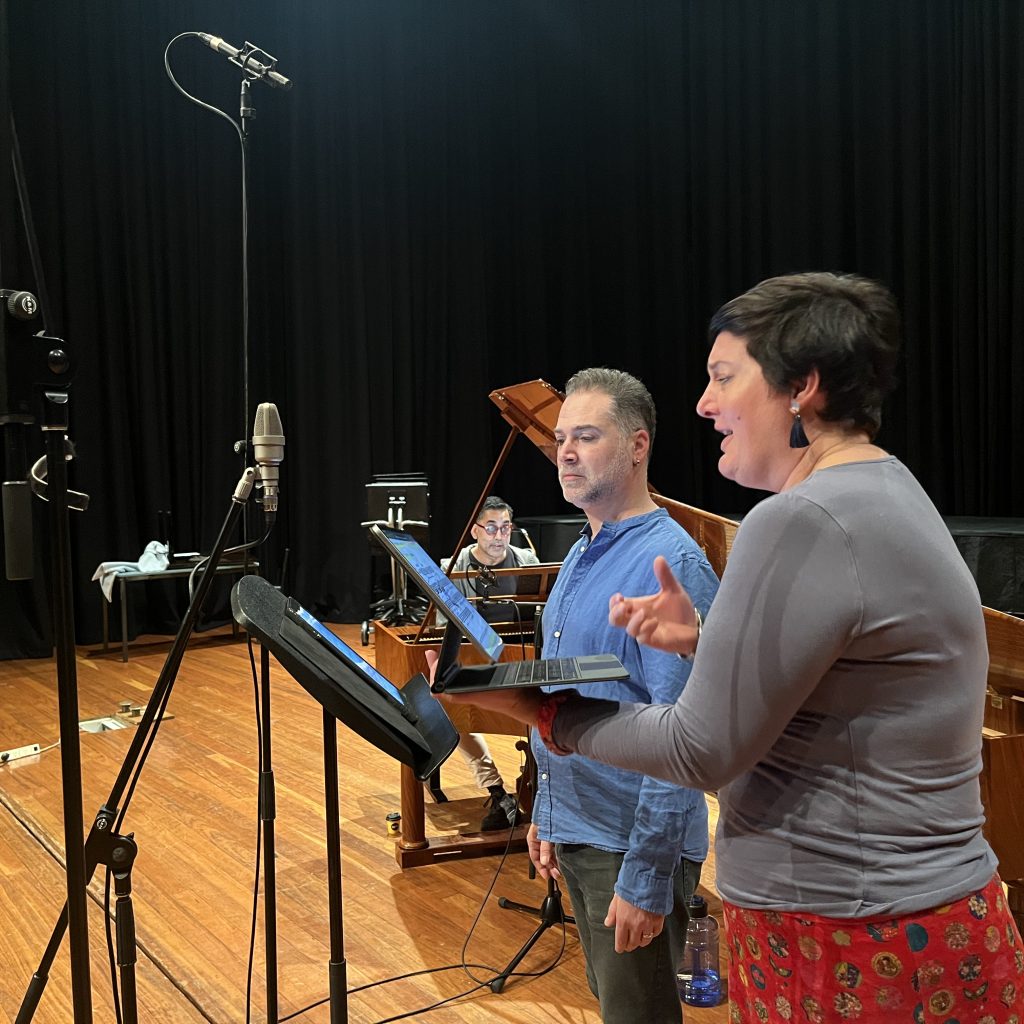
During Years 1–3, vocal practitioners, guided by the team, participated in various vocal workshops of practical experimentation with bel canto repertoire. Out of these workshop modules, the team has created a catalogue of research-based exemplar recordings (video and sound) at key stages, realise new styles and approaches to singing bel canto repertoire.
-
Excerpts from García’s Art of Singing II
Excerpts from García’s Art of Singing Volume II “García’s Emotional States”
There have been opportunities to trial interpretations at venues offering appropriate acoustic, size, and setting such as historic house drawing rooms and theatres (for example, Elizabeth Bay House in Sydney). Research shows that the smaller shoe-box rooms of the past, with their abundant early sonic reflections, directly influence tonal quality, articulation style and phrasing (Pätynen et al., 2014). This will afford the possibility of focusing on bel canto expressive practices without having to resort to the type of vocal projection that larger concert spaces tend to encourage.
Subsequently, vocal practitioners will trial how these interpretations can be adapted in larger concert spaces (for example, Verbrugghen Hall at SCM, Sydney Town Hall and Sydney Opera House Concert Hall), with either low, neutral, high, or flexible larynx positions. This stage will also involve experimentation with different types of instrumental accompaniment: lutes, harpsichords, historical pianos, modern pianos, and period and modern orchestras, to investigate how different instrumental sounds and textures affect vocal delivery.The production of exemplar recordings will be coordinated the Research Assistant with oversight from SCM’s Media, Production and Technology Manager Dr David Kim-Boyle to ensure quality control. The Research Assistant will generate and build the project’s taxonomy on the USyd sustainable open-access e-Scholarship (on-line) repository, first cataloguing descriptors of bel canto sounds and practices, and then embedding the catalogue with the exemplar recordings, matching descriptions with likely sound qualities. The Research Assistant will design a user-friendly website portal with a suitable software such as Squarespace. Additionally, a commercial CD recording of bel canto repertoire will be made by CIs McMahon and Peres Da Costa, the RA and HDRs, in historically-appropriate venues, utilising a range of instrumental forces available at SCM, to further promote the project’s processes and findings.
Organisational-Related Research Work
to facilitate and foster change in singing practice, in Years 1–3 the project will support: a) modules in which vocal practitioners will engage in practice-led processes (guided by the team) to extrapolate bel canto styles, and ensure the take-up of these as vocalists contribute to the project’s findings through their research-based interpretations; b) symposia in each year to present findings to pedagogues, professional singers, and industry; and, c) written and recorded outputs which will disseminate and embed new knowledge of bel canto. The Research Assistant will be responsible for the coordination of these events and production of research outputs.