Sonifying García
Background
In 1840, Manuel García II (1805–1906) – arguably the most famous singing pedagogue of the nineteenth century – published part 1 of his influential singing treatise entitled Ecole de García: Traité complet de l’art du chant (Treatise on the Art of Singing). This was followed in 1847 with the second edition of part 1, and the first edition of part 2 of the treatise. In these two parts, García preserved for the future an extraordinary level of detail about the art of bel canto as it had evolved within a continuum of operatic practice that stretched back at least two centuries. His descriptions are forensic in nature, informed by his newly-invented laryngoscope – a device that allowed García to examine the singers’ vocal tract and thus to determine, for the first time scientifically, how the emission of different sounds physically take place. García was a member of a famous family of singers, which included his father Manuel García I (1775–1832), and his two sisters Maria Malibran (1808– 1836) and Pauline Viardot (1821–1910). His treatise was extremely popular and was published in multiple formats throughout the nineteenth century and into the first decades of the twentieth century.
García taught many famous singers, some of whom were captured on early wax sound recordings. Those early sound recordings tell us much about nineteenth-century singing style which, at its heart, was declamatory. Bel canto singers told stories through their singing, employing the same types of sounds and delivery practices used by actors, narrators and orators. In this era, it was characteristic in bel canto for singers to use the full potential of vocal sounds and colours across their range, including the spectrum of light and dark sounds (chiaroscuro) created through varying laryngeal positions and pharyngeal shapes and spaces to convey forcefully and convincingly the meaning of the text.
This art steadily disappeared in the first half of the twentieth century in favour of a more consistently powerful, projected, and homogenous sound, with long, smooth, and largely uninflected lines.
Nineteenth-century singing, like instrumental playing, also relied on tempo rubato (rhythm and tempo modification – sometimes extreme by modern standards), sliding effects (portamento and scooping), trembling effects (tremolo and vibrato), varied articulation (short notes, connected notes, breaths and pauses), and added notes (ornamentation) to underscore and emphasise the text. These practices were, in most cases, not notated by the composer, however, it was the general expectation that singers would add these according to taste, need, and context. What is wonderful about García’s treatise is that he gave copious directions to singers about to how to apply such practices, marking up five works at the end of the part two with instructions about sound quality (timbre), dramatic breaths, portamenti, and the most florid of florid ornamentation.
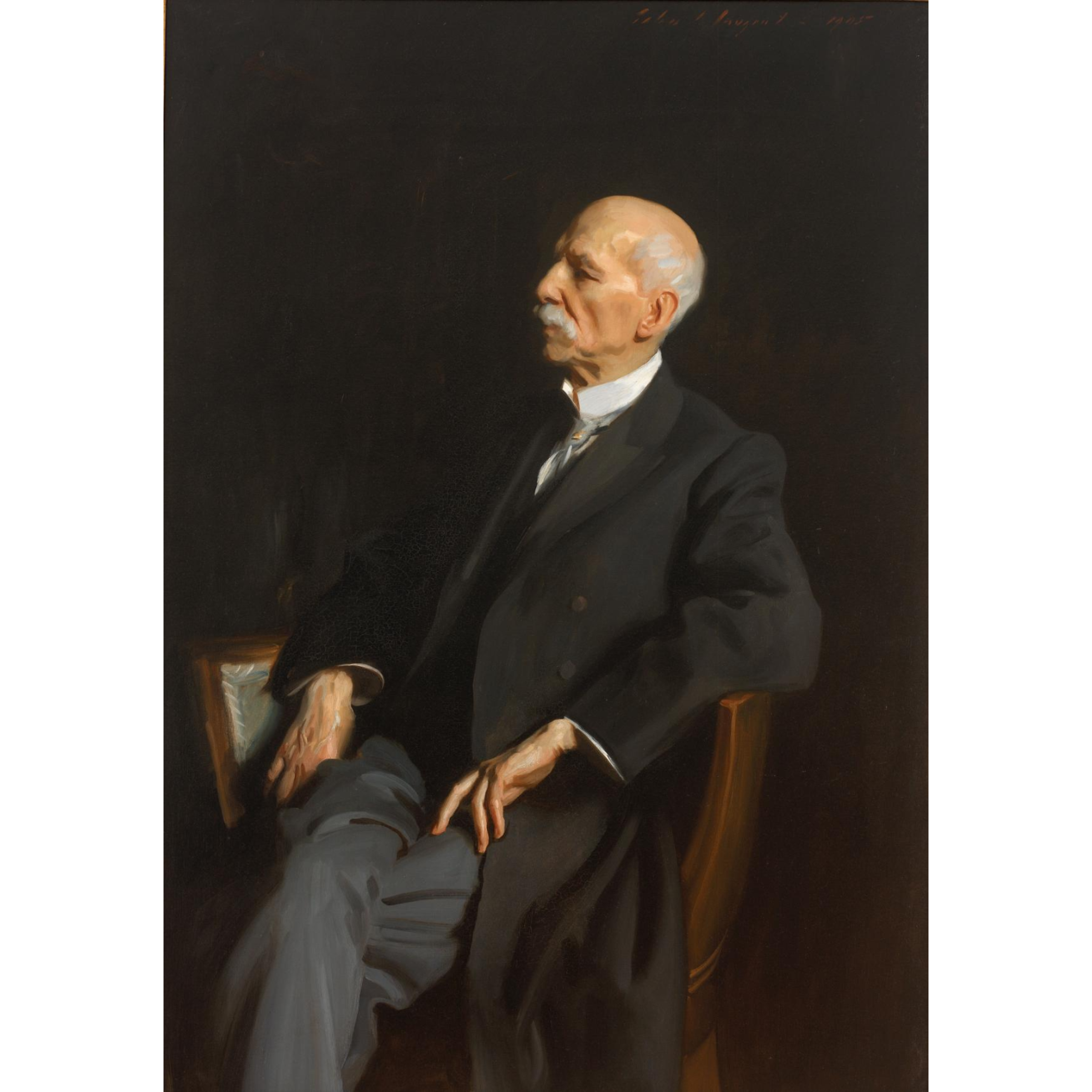
John Singer Sargent (American, 1856-1925)
Portrait of Manuel García, 1904-1905
Oil on canvas
138.1 x 97.2 cm (54 3/8 x 38 1/4 inches)
Museum Appropriation Fund 19.141
The Art of García: Recording Lineage
Recordings from the turn of the 20th century provide direct aural links to García’s verbal instructions. Only two of his students Charles Santley (1834–1922) and Marie Tempest (1864–1942) made recordings, however, there are many more recordings of students of García’s students spanning 1899 to 1937. Dr Koen van Stade, prepared a select list of singers who studied the expressive and technical practices espoused by García. These include nine singers who received indirect instruction and two singers who received, somewhat limited, but direct instruction. One of these was Santley who in the prime of his career received seven lessons from García. Although not a long-term student, García very much respected Santley’s singing artistry.
The popularity of García’s method for over almost a century is testament to the value of his teachings for understanding 19th-century bel canto. While much of García’s ideas remained the same as formulated by 1840, some variations and gradual shifts in his thinking are evident. In particular, later editions included the term médiocrement to describe interim laryngeal positions. This suggests an expansion of the possibilities of timbral colours that García encouraged his students to explore through various parameters. These parameters, clearly evident in the aural evidence, include: voice type, facility, tessitura, and placement.
Vocal Range and Repertoire Selection
The selection of repertoire in the soprano and mezzo soprano/contralto range from García’s lineage repertoire list poses some challenges. There are many examples of individual singers whose recorded repertoire exceeds modern notions of standardised voice type. This is precisely why the selection process should be carefully considered to achieve a balance between language, style, range, and timbral and expressive practices). It is important that the examples exhibit bel canto expressive effects and include clearly defined timbral shifts (through flexible laryngeal positions) and registral accentuation underscoring expressive sentiment of the text.
To assist with the selection process, categories of song have been established for each voice type for the five core (standard) languages: English, Italian, German, French and Latin, as these languages are the most well represented on the list. There are examples of repertoire in other languages, often sung in the native tongue of the artist. However, unless a module participant requests to emulate an example in a non-core language that is their native tongue, we recommend to focus on repertoire set in the five core five languages.
Voice Type Categorisation
Regarding voice type categorisation, a few examples predominantly of sopranos, have been redesignated as possible mezzo soprano examples for emulation because these highlight ranges at a lower tessitura and feature relevant timbral and registral qualities conducive to the aim of this module. These types of examples may be more accessible to participants with a lower (overall) vocal range. Whether this redesignation is wholly productive will be tested through the module. So many of the recordings demonstrate how technically versatile singers were (including male singers). They used all aspects of their range and didn’t seem to shy away from showcasing qualities of timbral effect in the furthest reaches of their vocal facility. Participant repertoire selections have therefore been flagged as soprano range/tessitura, mezzo range/tessitura, and so on to guide module participant choice.
Annotated Arias from Ecole de García: Traité complet de l’art du chant
Francesco Morlacchi (1784–1841)
Francesco Morlacchi (1784–1841)
Morlacchi, Morir ciel qual concento, ‘Art of Singing’ (Vol 2), performed by Neal Peres Da Costa, fortepiano and Anna Fraser, soprano.
Annotations by Manuel García II from Ecole de Garcia, Traité Complet de l’art du Chant en 2 parties (Part 2) (Paris: L’auteur, 1847).
Domenico Cimarosa (1749–1801)
“Chi per pietà” Recitative from Il sacrifio d’Abramo (1786)
Cimarosa, Chi per pietá, ‘Art of Singing’ (Vol 2), performed by Neal Peres Da Costa, fortepiano and Claire Burrell-McDonald, soprano.
Annotations by Manuel García II from Ecole de Garcia, Traité Complet de l’art du Chant en 2 parties (Part 2) (Paris: L’auteur, 1847).
Gioachino Rossini (1792-1868)
“Deh ti ferma ti placa perdona” Aria from Semiramide (1823)
Rossini, Deh ti ferma ti placa perdona, ‘Art of Singing’ (Vol 2), performed by Neal Peres Da Costa, fortepiano and David Greco, baritone.
Annotations by Manuel García II from Ecole de Garcia, Traité Complet de l’art du Chant en 2 parties (Part 2) (Paris: L’auteur, 1847).