Further Links
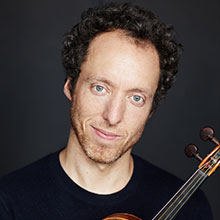
Dorian Bandy
Dorian Bandy is a musicologist and performer with wide-ranging interests in the 17th through early 19th centuries.
Dorian’s academic work, which draws from music history, theory, and philosophy, focuses on Mozart and Beethoven. He is the author of Mozart the Performer: Variations on the Showman’s Art, an interpretive guide to Mozart’s output based on analytic accounts of his solo keyboard works, concertos, symphonies, and operas. Dorian’s other research interests include topic theory, intellectual history in the eighteenth and early nineteenth centuries, the history of performance practice, various issues in aesthetics and the philosophy of music (including the work concept, meme theory, musical meaning, and the philosophy of historical performance), and philosophical artworks more broadly (especially Stephen Sondheim’s musicals). His writings on these and related topics have appeared in publications ranging from leading academic journals to popular outlets such as aeon.co, violinist.com, and aestheticsforbirds.com. He is a member of the Re:Enlightenment collective and currently serves as Vice President of the Mozart Society of America.
As a performer, Dorian is active as a conductor, baroque violinist, and historical keyboardist. His repertoire spans four centuries, and his performances—praised for their “impressive emotional scope,” a “virtuosity [that is] relentless, precise, and above all, dazzling” (The Whole Note), and “sense of unleashed HIP fun” (Gramophone)—have taken him to venues across Europe and North America. As a conductor, he has led opera productions on both sides of the Atlantic, including the North American stage premiere of Haydn’s final opera L’anima del filosofo, the New York premiere of Alessandro Scarlatti’s Il trionfo dell’ onore, and a London Così fan tutte recognized by the Off West End Awards as the UK’s Best Opera Production that year. His conducting has garnered acclaim for its “unquestionable theatricality” and “palpable passion” (Opera Today) and ability, in Mozart’s operas, to “tread the line between joy and sadness” (Opera Now).